Hydronic and In-Floor Heating in Windsor: A Pre-Winter Startup Guide
When you first turn on your heating in the fall, an in-floor system may take longer to warm a room than a forced-air furnace. That gradual response can be normal, especially when tubing is embedded in a concrete floor. But a zone that never reaches its set temperature, unusual noises, or inconsistent heat from room to room deserves a closer look before winter.
If your home or commercial property uses hydronic heating in Windsor, early fall is a useful time to observe how the complete system starts and responds. The boiler is only one part of it. Thermostats, pumps, valves, manifolds, piping, and controls all affect where heat goes and how consistently it arrives.
M&M Global Mechanical Services provides boiler, hydronic, and in-floor heating services throughout Windsor and Essex County. Here is what to watch for as the heating season begins.
Give Radiant Floors Time to Respond
A forced-air furnace delivers warm air through registers soon after it starts. Hydronic in-floor heating works differently: heated water circulates through tubing, and warmth moves through the floor and into the room.
The response time depends on the floor’s construction, finish, insulation, water temperature, and controls. A system embedded in a thick concrete slab may respond more slowly than one installed beneath a wood subfloor. A slow initial warmup, by itself, does not prove there is a fault.
Instead of judging the system after only a few minutes, note whether each heating zone eventually reaches a comfortable room temperature and maintains it. Avoid making repeated large thermostat changes while assessing performance; a high-mass floor may take time to respond to each adjustment.
Check Each Heating Zone Separately
Many hydronic systems divide a property into zones with their own thermostats and controls. During the first few heating cycles, pay attention to whether each zone responds as expected.
You may notice:
- One room stays cool while other areas warm normally
- A thermostat calls for heat, but its zone does not respond
- A floor feels noticeably different from the same area in previous seasons
- Heating is inconsistent across several rooms
- The system runs, but the property struggles to reach the desired temperature
Compare room temperatures and thermostat settings, and note which zones are affected. This information can help a technician narrow the investigation. Uneven in-floor heating can have several causes, so a cold area does not automatically mean that the boiler needs replacement. Also consider changes made since last winter. New flooring, thick rugs, or furniture covering a large heated area can affect how readily warmth reaches the room.
Listen and Look for Changes Around the System
You do not need to open equipment or adjust valves to gather useful information. During startup, listen for new gurgling, trickling, banging, or persistent mechanical noises. Look for visible water around accessible piping, the manifold, or the boiler, and note any error messages displayed by the controls.
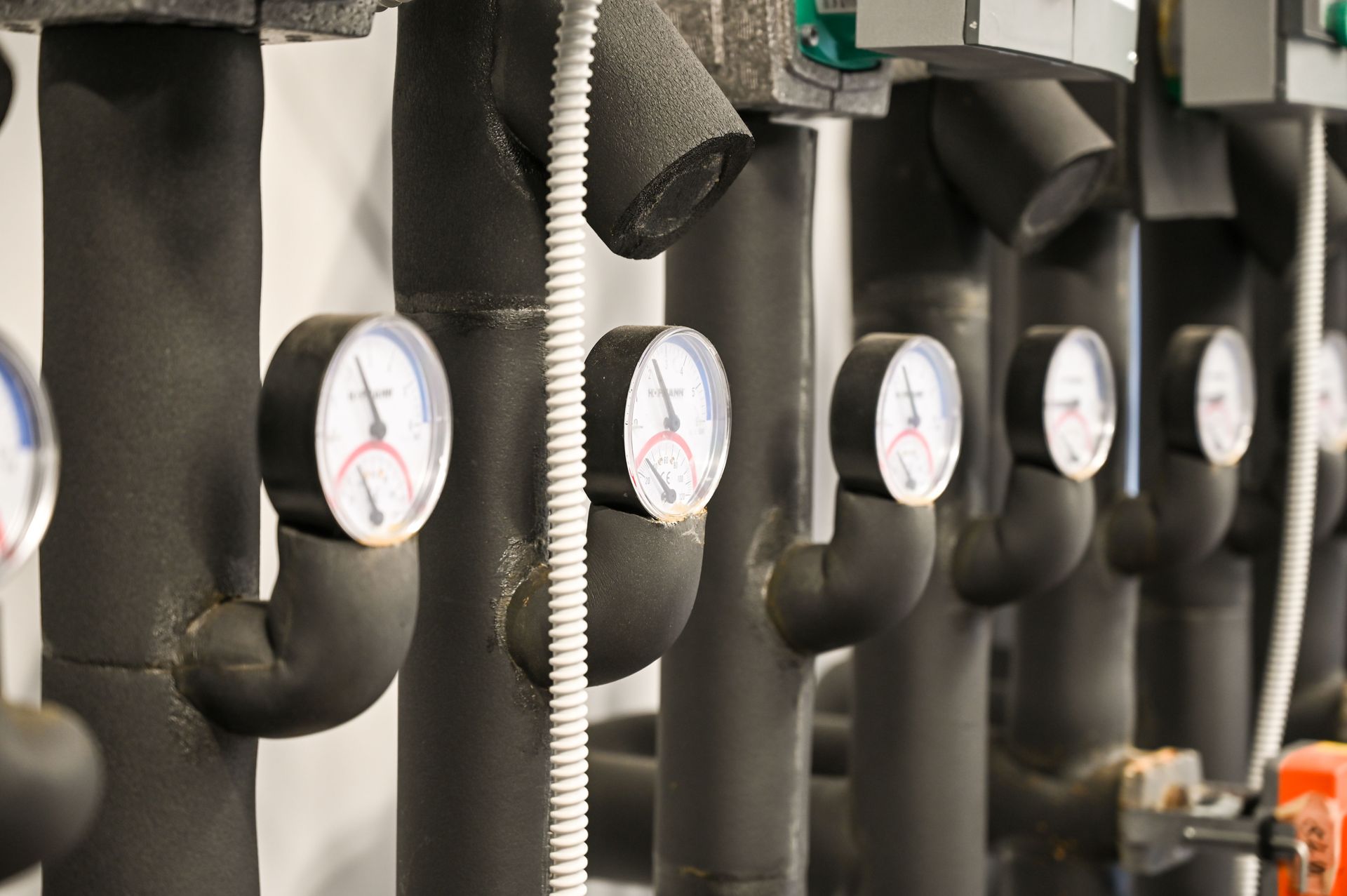
Record what you observe and when it happens. For example, does the noise begin when one particular zone calls for heat? Does the boiler run while a specific room remains cold? Has system pressure or a displayed temperature changed from its usual reading? There is no universal “correct” number to apply to every installation, but a technician can interpret readings in the context of your system.
Do not remove covers, bleed or refill the system, change boiler settings, or handle gas and electrical components without the appropriate training. If you notice an active leak, a gas smell, a burning odour, or another immediate safety concern, stop using the affected equipment and arrange appropriate urgent assistance.
Why Might One In-Floor Heating Zone Stay Cold?
A hydronic system must produce heat, move heated water, and deliver it to the correct zone. A problem at any point in that sequence can affect comfort.
Depending on the installation, a technician may investigate:
- Thermostat settings, sensors, and zone controls
- A valve or manifold actuator that is not opening as expected
- A circulator pump or flow restriction
- Air trapped within a circuit
- System pressure or an expansion-related concern
- Water temperature and boiler-control settings
- Heat transfer through the floor assembly
These are possible diagnostic paths, not a list of parts that should be replaced based on symptoms alone. Technicians should trace the system’s operation from the heat source through circulation and distribution to the comfort experienced in the building.
What Should a Pre-Winter Assessment Cover?
If the heating system has been unreliable, has a cold zone, or has not been serviced recently, a professional assessment can help identify concerns before sustained cold weather increases demand. The scope should match the equipment and the symptoms. A technician may check how the boiler starts and operates; review accessible piping, pumps, valves, manifolds, and controls; assess zone response and circulation; and explain any maintenance or repairs the system needs.
Scheduled care can also give property owners a clearer record of equipment condition over time. M&M Global offers preventive HVAC maintenance plans that can be tailored to hydronic equipment and the needs of the property. If a significant boiler issue is found, the next decision is not automatically replacement. The system’s condition, repair history, and the nature of the fault should guide that discussion. Our article on boiler repair versus replacement in Windsor explains the factors to consider.
Prepare for Reliable Heat in Windsor–Essex
A gradual warmup may be normal for radiant flooring. A zone that stays cold, controls that fail to respond, persistent unusual noises, or visible leakage should not be dismissed as “just how in-floor heat works.”
M&M Global Mechanical Services assesses and services boilers, hydronic equipment, and in-floor heating systems for homeowners and businesses across Windsor and Essex County. We’ll examine the connected system, explain what we find, and recommend practical next steps.
Should an in-floor heating system feel hot underfoot?
Not necessarily. Its purpose is to maintain a comfortable room temperature, and the floor surface may feel only mildly warm. The floor construction, finish, controls, and current heating demand all affect how it feels. A zone that cannot heat its room is more useful to investigate than floor warmth alone.
Does one cold zone mean the boiler is failing?
No. If other zones heat normally, the affected zone’s thermostat, control, valve, circulation, or piping may need attention. A technician should diagnose the connected system before identifying the cause.
Should I use a large overnight thermostat setback with radiant floors?
It depends on the system. Floors with substantial thermal mass can take longer to recover after a large setback. If morning comfort is inconsistent, ask your heating contractor whether a smaller setback or steadier setting better suits your installation.