Before cooling season, commercial HVAC maintenance should cover equipment condition, filters and airflow, thermostats and controls, coils, condensate drainage, and operating performance. The exact work depends on the systems installed, their condition, and how the building is used.
For businesses in Windsor and Essex County, preparing ahead of heavy cooling demand gives property managers time to investigate complaints, address developing concerns, and schedule necessary work. A useful maintenance visit should produce clear findings and practical recommendations.
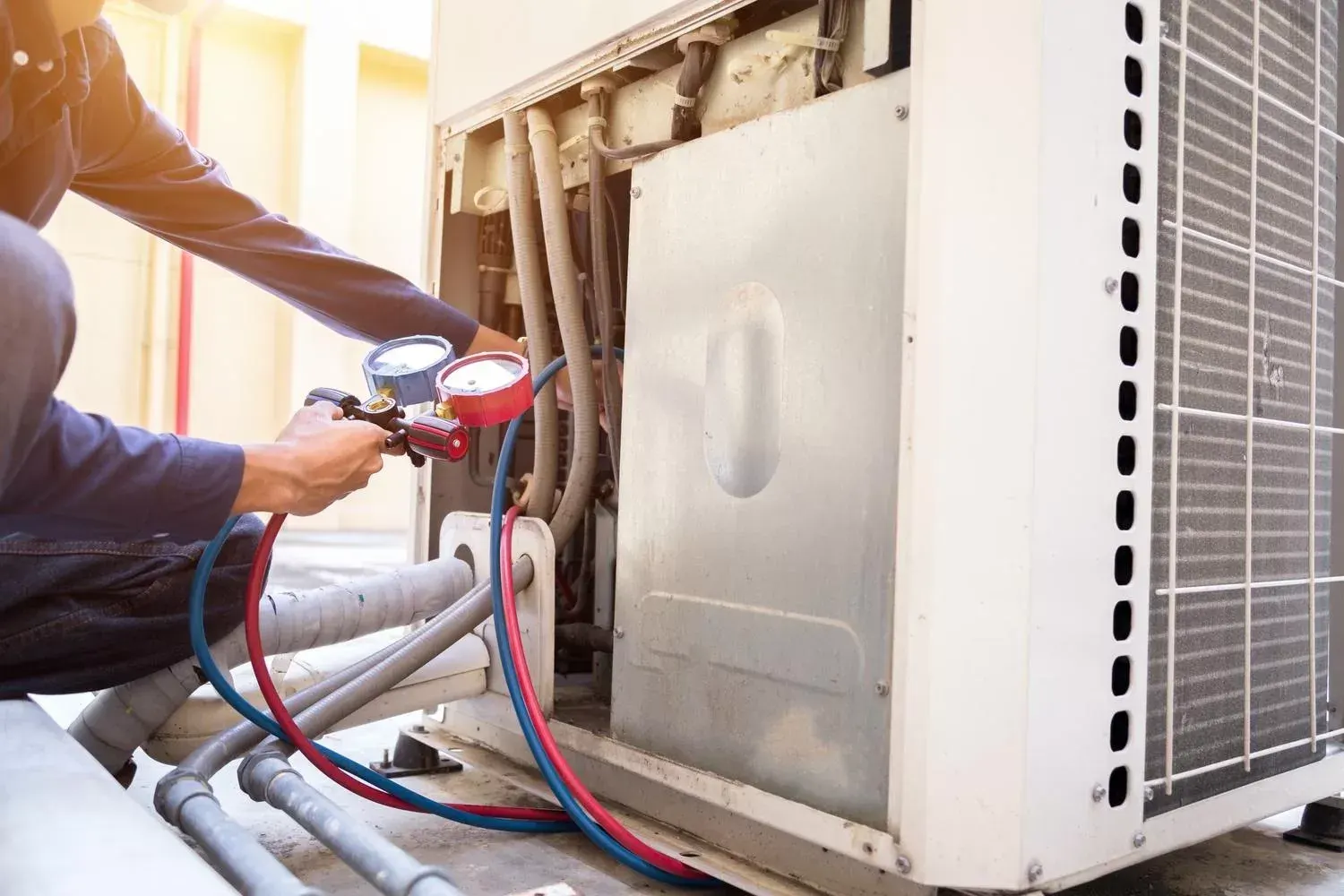
Why Prepare Commercial HVAC Equipment Before Cooling Season?
Commercial cooling requirements vary considerably. A professional office, restaurant, retail store, warehouse, and industrial facility may have different operating hours, occupancy patterns, ventilation needs, and internal heat loads.
Equipment problems can develop through restricted airflow, dirty components, worn parts, drainage issues, or controls that no longer match the building’s schedule. Some become apparent gradually; others occur unexpectedly.
Maintenance can help identify developing concerns and reduce avoidable disruption. It cannot guarantee uninterrupted operation, but it gives the business better information for planning repairs before cooling becomes essential.
What Property Managers Can Prepare Before the Service Visit
Start by gathering information that helps the technician understand the building and its equipment.
- Record comfort complaints: Note which areas become too warm, when problems occur, and whether airflow seems different.
- Review operating schedules: Identify opening hours, tenant schedules, production periods, and recent occupancy changes.
- Collect available records: Gather equipment details, previous service reports, repair history, and known unresolved concerns.
- Coordinate access: Confirm arrangements for mechanical rooms, building controls, and authorized rooftop access.
- Discuss service timing: Explain any restrictions around customer hours, tenant activities, or business-critical equipment.
Building staff can also keep accessible supply and return grilles clear of stored materials. These preparations do not require opening equipment or accessing the roof. Rooftop inspections, electrical work, refrigerant service, and internal mechanical work should be handled by qualified personnel.
Inspect Rooftop Units and Other Cooling Equipment
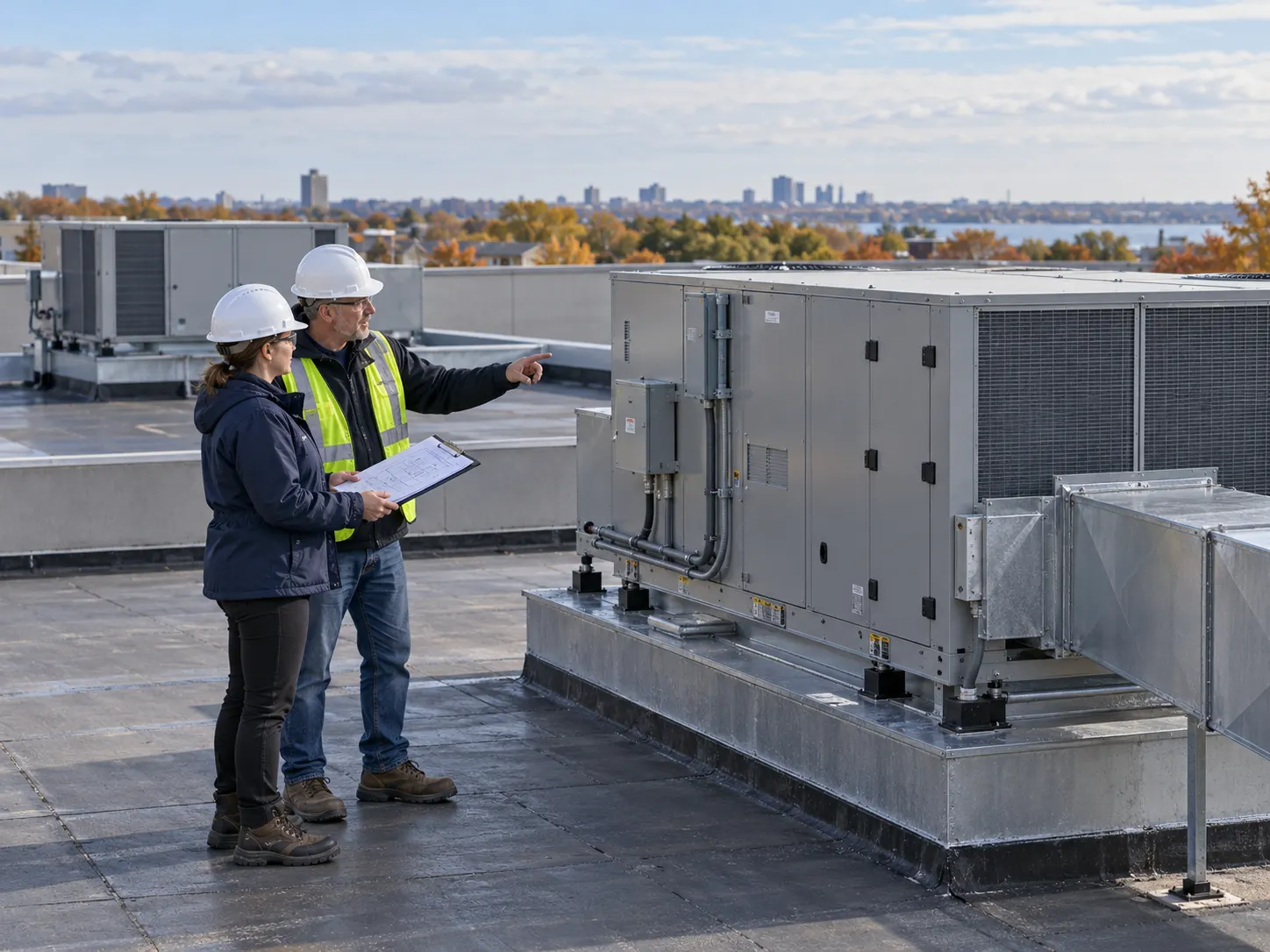
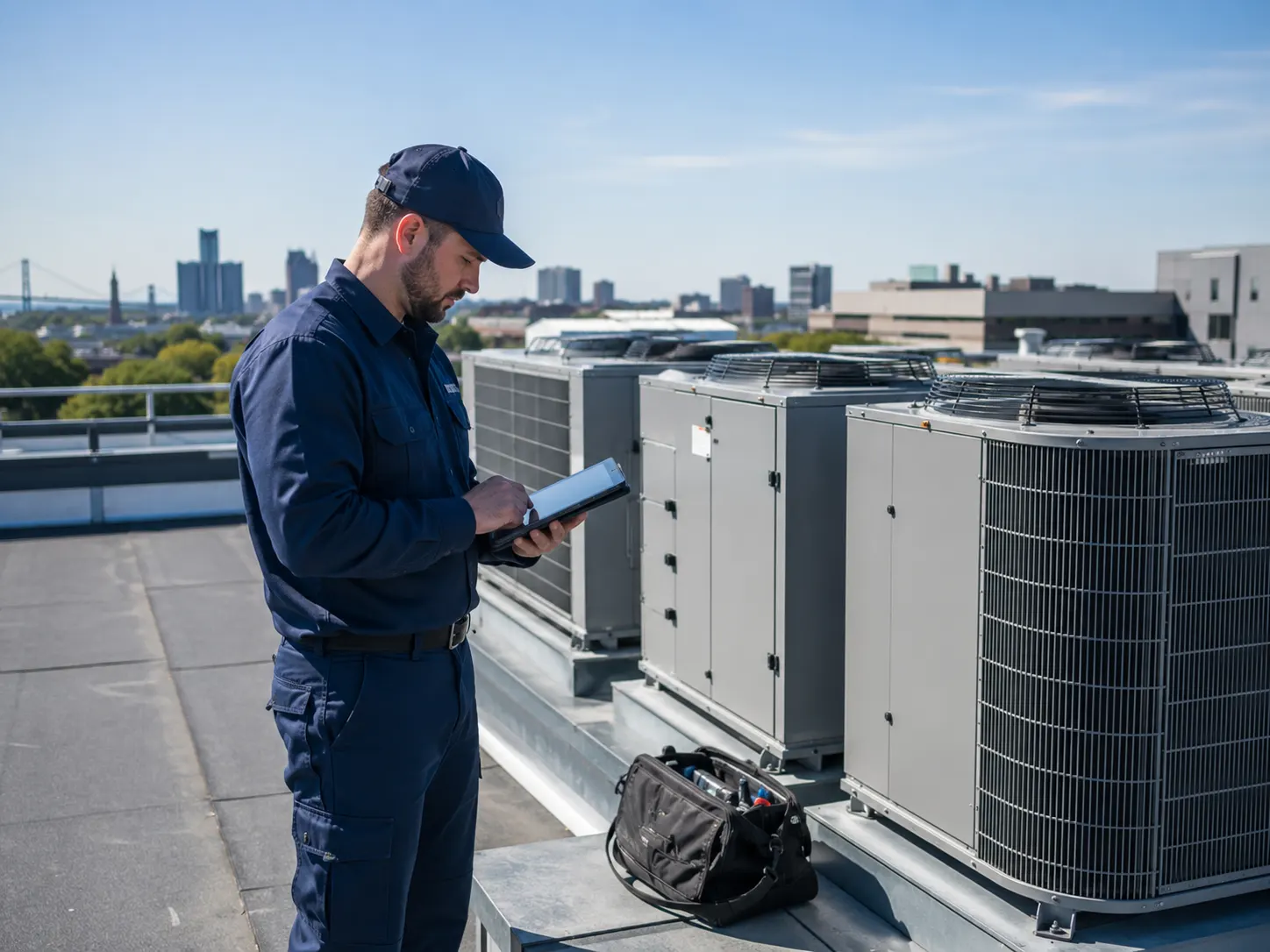
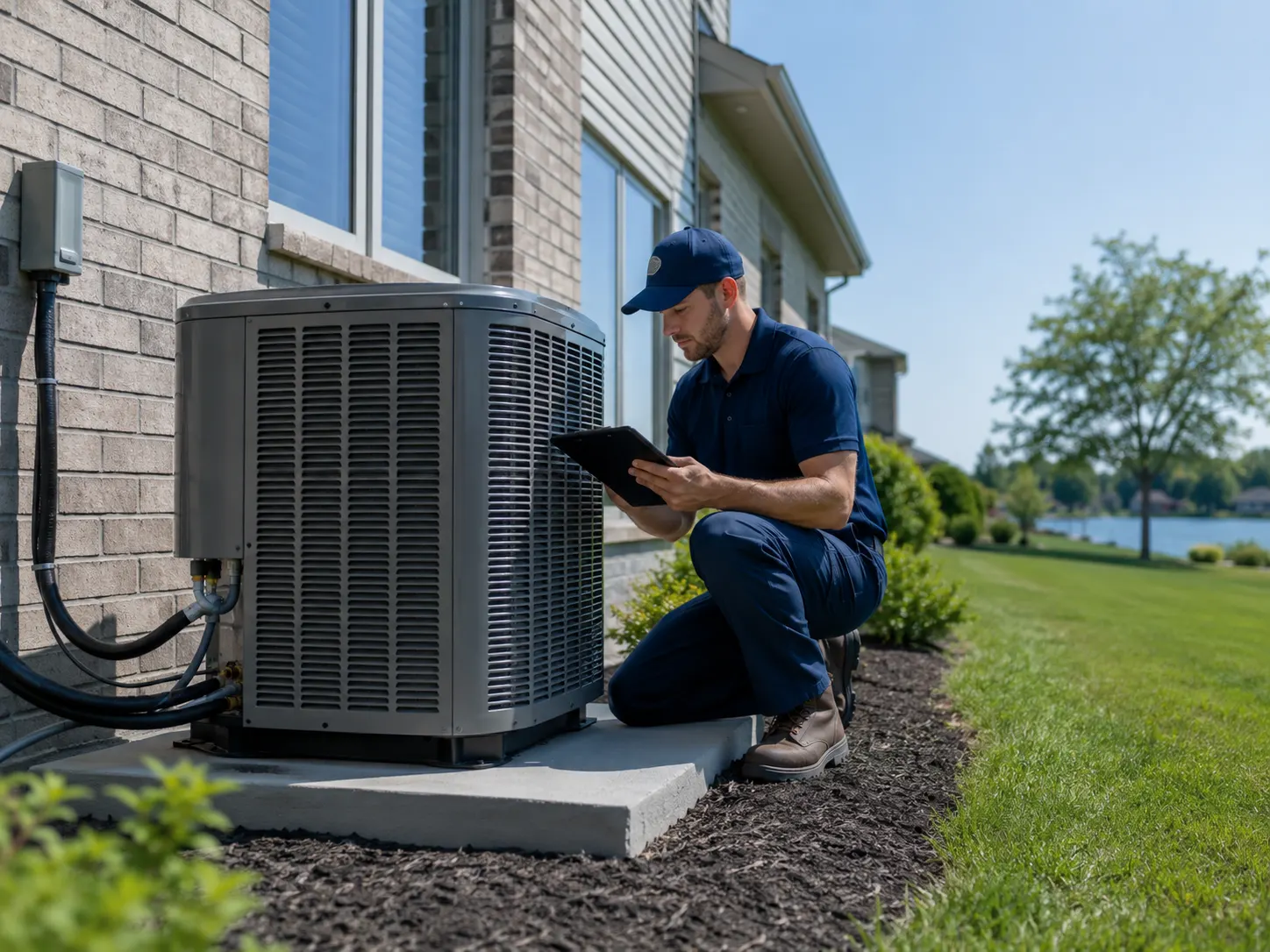
Many commercial properties use packaged rooftop units, often called RTUs. Others have split systems, air handlers, or several equipment types serving different areas.
A technician should identify the equipment being assessed and tailor the inspection to its configuration. For rooftop units, relevant checks may include:
- Cabinet condition, corrosion, and panel security.
- Fans, motors, and belts where fitted.
- Accessible electrical components and controls.
- Coil condition and signs of restricted airflow.
- Condensate collection and drainage.
- Dampers, economizers, and outdoor-air components where installed.
- Startup, cooling operation, and shutdown.
The presence of one working unit does not confirm that every zone is receiving adequate cooling. Where several systems serve the property, reports should identify which units were inspected and any that require follow-up.
M&M Global provides commercial rooftop unit service , including troubleshooting, repairs, replacement, and scheduled maintenance for Windsor–Essex properties.
Check Filters, Airflow and Air Distribution
Filters should be inspected and replaced when necessary, using the type and specifications appropriate for the equipment. Replacement frequency depends on operating hours, the environment, filter requirements, and manufacturer guidance.
A heavily used building or dusty environment may require different attention from a lightly occupied office. A single annual replacement schedule should not be assumed suitable for every property.
Airflow checks should also consider supply and return restrictions, accessible ductwork, diffusers, and complaints from individual rooms or zones. Uneven temperatures do not automatically indicate that the cooling unit needs replacement; distribution problems, controls, and building conditions may also contribute.
Review Thermostats, Schedules and Controls
Controls influence when equipment operates and how it responds to changing conditions. Before summer, review thermostat settings, temperature sensors, occupied and unoccupied schedules, and applicable zoning controls.
Schedules may need attention after changes to business hours, tenant occupancy, or building use. An old schedule can leave equipment running when the space is empty or fail to prepare occupied areas when needed.
Where the building uses automation or specialized controls, the HVAC contractor may need to coordinate with the controls provider. Economizer and ventilation controls should be assessed as applicable to the installed system.
Inspect Applicable Belts, Motors and Electrical Components
Fans, motors, belts, bearings, and electrical components should be assessed according to equipment design and service requirements. Not every system has the same components or inspection needs.
The technician can look for wear, unusual vibration, damaged connections, or other operating concerns that warrant further investigation. Where adjustments or repairs are recommended, the business should understand the finding and proposed work.
Building staff should report unusual sounds, repeated shutdowns, or changes in operation. Internal electrical testing and mechanical adjustments belong with qualified personnel.
Assess Coils, Condensate Drainage and Cooling Performance
Coil condition affects heat transfer. A technician should assess whether cleaning is needed and use methods appropriate for the equipment. Condensate pans, drains, and related components should also be checked for blockages, leaks, or deterioration. Unexpected water around equipment or inside the building deserves investigation rather than repeated cleanup alone.
Cooling performance should be evaluated using appropriate operating checks. Where findings suggest a refrigerant-related problem, further diagnosis may be necessary. Refrigerant should not be treated as a routine consumable that simply needs topping up; a suspected leak requires investigation.
The maintenance scope should distinguish inspections and routine service from additional diagnostic work or repairs requiring approval.
Review Findings and Prioritize Follow-Up Work
A useful service report should tell the property manager:
- Which equipment was inspected and what work was completed.
- Which concerns need prompt attention.
- Which repairs should be scheduled before heavier cooling demand.
- Which conditions can be monitored.
- Whether further testing or a separate quotation is recommended.
Ask for equipment-specific findings where multiple units serve the property. “The rooftop equipment needs work” is less useful than identifying the affected unit, the concern, and its likely operational significance.
Some findings may support a straightforward repair. Others may justify longer-term replacement planning. Age alone should not determine the decision; condition, repair history, performance, and the building’s needs also matter.
Seasonal preparation should sit within a broader service schedule. M&M Global’s preventive HVAC maintenance plans can be tailored to the equipment and property. For help evaluating ongoing coverage, read what a commercial HVAC maintenance plan should include .
Arrange Commercial HVAC Maintenance in Windsor–Essex
Preparing commercial cooling equipment before peak demand gives your business time to understand its condition and arrange recommended work.
M&M Global Mechanical Services provides commercial HVAC maintenance, rooftop unit service, and mechanical support throughout Windsor and Essex County. Discuss your equipment, operating requirements, and known concerns so the service scope reflects your property.
Call 519-944-9949 or discuss cooling-season maintenance for your property with M&M Global.