When a commercial rooftop unit develops a problem, repair may be practical if the fault can be addressed and the remaining equipment is in serviceable condition. Significant deterioration, recurring failures, difficult parts availability, or changing building requirements may justify comparing replacement options.
For businesses in Windsor and Essex County, the decision should start with a diagnosis and a review of the unit’s condition, repair history, and role in the property. Age, a higher utility bill, or one uncomfortable room cannot establish the answer alone.
M&M Global Mechanical Services provides commercial rooftop unit repair , maintenance, and replacement services to help property owners understand their equipment and plan appropriate work.
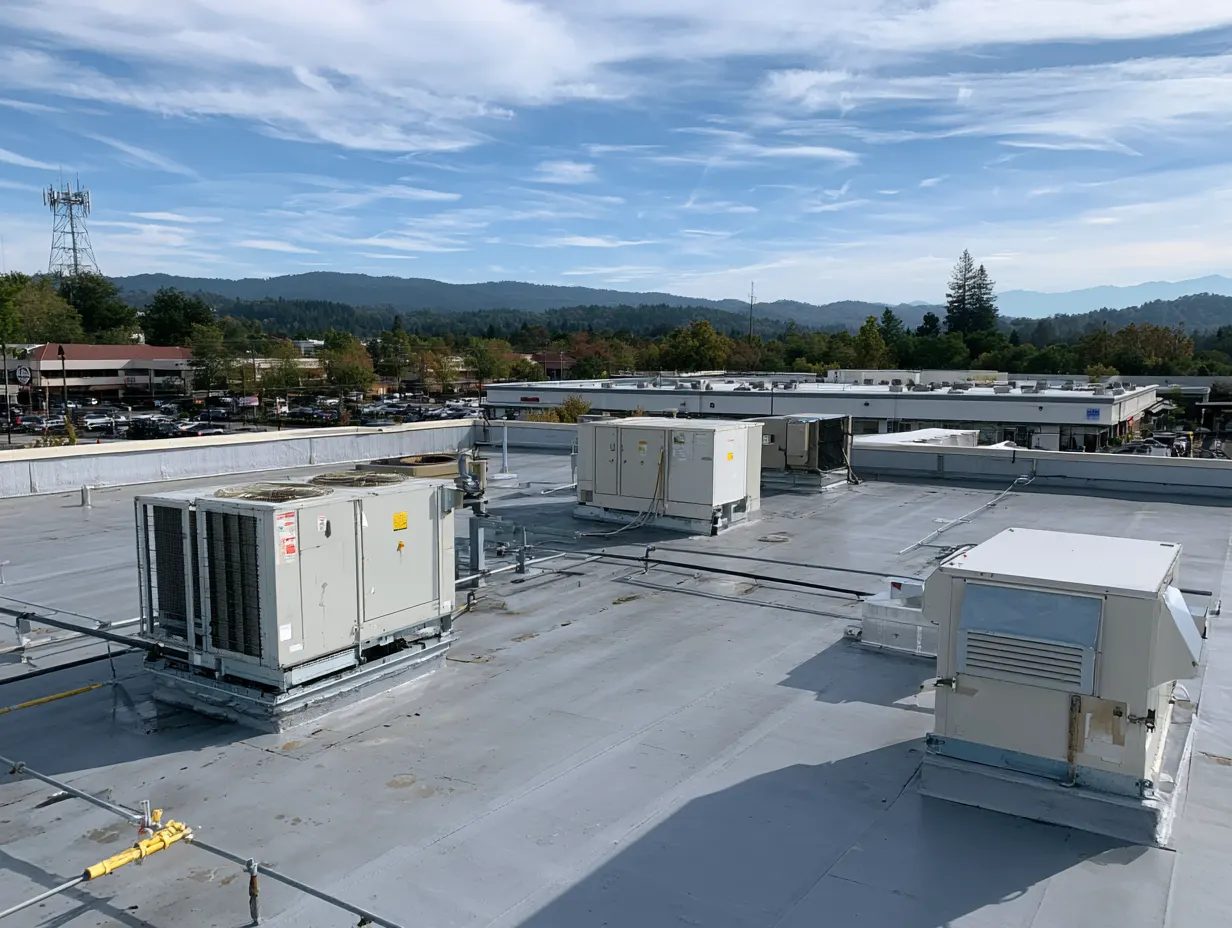
Why Rooftop Units Matter for Commercial Buildings
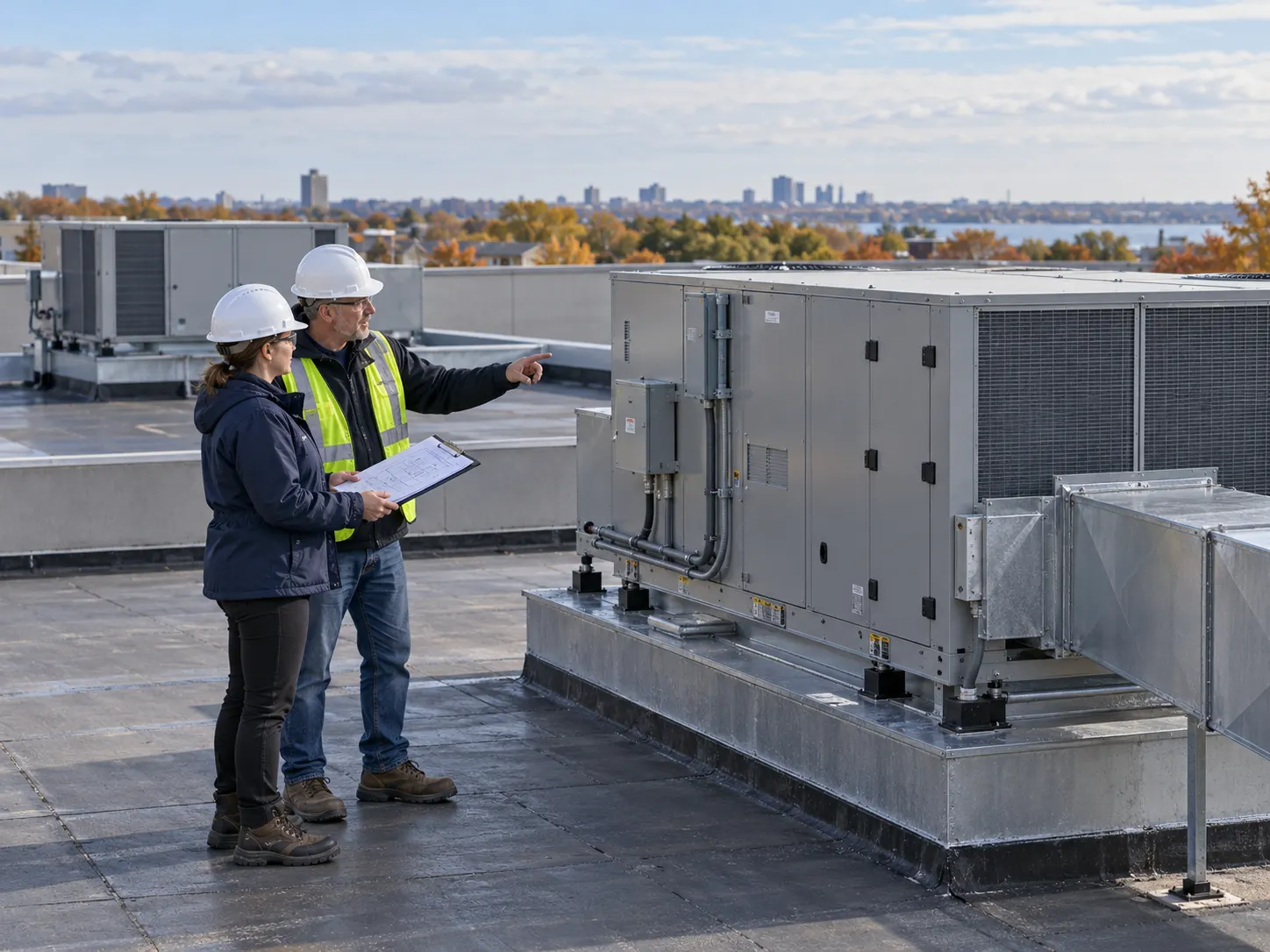
Packaged rooftop units, commonly called RTUs, provide heating, cooling, ventilation, or a combination of these functions, depending on their configuration. They serve many offices, retail properties, restaurants, warehouses, and other commercial buildings.
Their workload depends on operating hours, occupancy, building use, environmental exposure, and the areas they serve. A unit supporting a busy occupied space may have different demands from equipment serving a lightly used section of the property. Understanding those demands helps a contractor assess whether the equipment is operating appropriately and still suits the building’s needs.
Common Signs Your Rooftop Unit Needs Attention
Changes in operation can indicate a developing concern, although some failures occur without advance warning. Reasons to arrange an assessment include:
- Persistent uneven heating or cooling.
- Weak airflow or a change in air distribution.
- New or unusual operating noises.
- Frequent starts, stops, or unexpected shutdowns.
- Difficulty maintaining the required temperature.
- Unexplained increases in energy consumption.
- Reported corrosion, leakage, or component deterioration.
- Repeated service calls for unresolved problems.
These observations do not identify a particular failed part or prove that replacement is necessary. For example, comfort problems may involve controls, schedules, ductwork, or changing room use. Property managers can record the affected areas, timing, operating conditions, and recent changes. Rooftop access and technical equipment inspections should be handled by appropriately qualified personnel.
When Rooftop Unit Repair Makes Sense
Repair deserves consideration when the cause is understood, suitable parts are available, and the proposed work addresses the fault without leaving substantial known concerns unresolved.
Depending on the equipment and diagnosis, work may involve fans, motors, belts, sensors, controls, electrical components, drainage, or refrigeration-system faults. The number of components involved is less useful than understanding their condition, the required work, and how the rest of the unit is performing.
Ask the technician to explain:
- What has failed and what supports the diagnosis.
- What the proposed repair includes.
- Whether other significant deterioration was found.
- Whether parts availability affects timing.
- What follow-up checks or monitoring are recommended.
A repair can restore operation without making the entire unit equivalent to new equipment. The recommendation should account for the condition of the components that remain.
When Replacement Should Be Considered
Replacement may warrant closer evaluation when major components are deteriorating, substantial repairs are accumulating, recurring faults remain unresolved, or necessary parts are difficult to obtain.
Changes to the property can also affect the decision. New tenants, different operating hours, altered layouts, or additional equipment may change heating, cooling, and ventilation requirements. However, a higher bill alone does not demonstrate declining equipment efficiency. Weather, utility rates, schedules, occupancy, and control settings can also affect costs. Likewise, replacing an RTU may not resolve an unrelated distribution or zoning problem.
Compare a defined repair scope with a complete installed replacement quotation. Applicable work may extend beyond the unit itself to roof-curb compatibility, connections, controls, lifting arrangements, access, and commissioning. The quotation should identify what is included and which existing conditions the proposed replacement will address.
Repair vs Replacement: Quick Decision Guide
Repair may be worth pursuing when:
- The diagnosed fault has a practical corrective solution.
- Suitable parts are available.
- The remaining equipment is in serviceable condition.
- The repair scope and cost are reasonable in context.
- The unit continues to suit the area it serves.
Replacement deserves comparison when:
- Significant deterioration affects major components.
- Repeated faults or substantial repair needs undermine reliability.
- Parts availability makes continued service difficult.
- The equipment no longer meets the building’s requirements.
- A complete assessment supports replacement over further repair.
These are discussion points, not automatic rules. Age helps provide context, but neither a calendar threshold nor a single symptom should determine the outcome. An assessment also cannot guarantee how many additional years a repaired unit will operate.
Why Preventive Maintenance Is So Important
Scheduled maintenance helps document condition, assess operation, and identify concerns that may require repair or monitoring. It cannot eliminate every unexpected breakdown.
The scope should reflect the installed equipment, manufacturer requirements, operating hours, and environment. As applicable, a technician may assess:
- Filters, airflow, fans, motors, and belts.
- Coils and cooling operating conditions.
- Signs of refrigerant-related faults.
- Electrical components and controls.
- Condensate collection and drainage.
- Dampers, economizers, and ventilation components.
- Heating components and safety controls.
- Startup, operation, and shutdown.
Operational settings matter alongside component condition. Schedules and controls should reflect how the building is actually used. M&M Global's preventive HVAC maintenance plans can support ongoing equipment care and provide information for future repair and replacement decisions.
Plan Replacement Priorities Across Multiple Rooftop Units
A replacement cycle is a plan that changes as equipment condition and building needs change. It is not a fixed expiry date applied to every unit.
For properties with several RTUs, maintain a record that identifies:
- Each unit and the area it serves.
- Approximate age and assessed condition.
- Service history and recurring faults.
- Outstanding repairs and parts availability.
- The operational consequences of losing that unit.
- Recommended timing for reassessment or further work.
This information helps distinguish equipment needing prompt attention from units that can remain in service with appropriate maintenance and monitoring.
A unit serving a critical occupied area may require different planning from one serving a less frequently used space. Similar installation dates do not necessarily mean every unit should be replaced together.
Review priorities after significant repairs, inspections, or changes in building use. Where replacement is justified, the next step is to define the project and its practical requirements. Our guide to planning a commercial HVAC upgrade covers scope, downtime, coordination, and ongoing support.
Arrange a Rooftop Unit Assessment in Windsor–Essex
A useful recommendation explains the diagnosed problem, equipment condition, available options, and work involved. It should help your business decide what needs attention now and what can be planned or monitored.
M&M Global Mechanical Services works with businesses and property managers throughout Windsor and Essex County to assess, repair, maintain, and replace commercial rooftop equipment.
Call 519-944-9949 or request a rooftop unit assessment to discuss your property’s equipment and operating needs.